Indian Hills, CO · Jefferson County
Basement Water Removal in Indian Hills, COBasement Dehumidification & Basement Drying Services
Basement Water Removal in Indian Hills covers basement water pump out, basement wall drying and basement dehumidification after a flood.
Answered 24/7
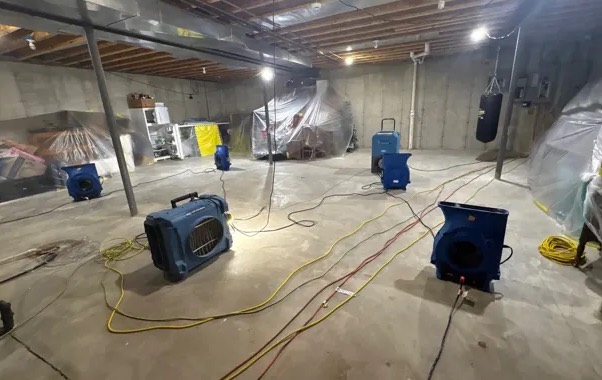
Professional Basement Water Removal in Indian Hills, CO
A wet basement gets worse every hour the water stays. In Indian Hills, water on a basement floor wicks up drywall, soaks carpet pad and seeps into the concrete, and cool below-grade air keeps it from drying on its own.
A single storm or burst pipe in Indian Hills can flood a basement. Local basement water removal pros serve Indian Hills and nearby Idledale, Morrison and Kittredge, with help available around the clock.
Specialized Basement Water Removal for Indian Hills
Basement Dehumidification
After drying, a household dehumidifier may still be needed to keep basement humidity in a healthy range.
Basement Drying Services
After pumping, air movers and dehumidifiers dry the walls, framing and slab. Readings are taken daily until every surface is back to normal.
Basement Moisture Inspection
Moisture meters and thermal cameras check walls, floors and the slab for water that is not visible, including behind finished walls.
Sump Pump Failure Water Cleanup
Cleanup after a sump failure includes drying the area around the pit and noting whether the pump, switch or power was the cause.
Basement Water Pump Out
When water is more than an inch or two deep, pumps move it far faster than wet vacs, which limits how long walls sit in water.
Warning Signs You Need Basement Water Removal
Efflorescence on Concrete Walls
White, powdery deposits on concrete walls mean water is passing through the masonry.
Musty Odors and Mold Smell
A musty or damp smell in the basement points to wet materials hidden somewhere in the space.
Standing Water in Basement
Standing water anywhere on the basement floor needs to be pumped out before it soaks the walls.
Soggy or Wet Carpeting
Carpet that feels damp or smells sour is holding water in the pad against the concrete.
How Basement Water Removal Works in Indian Hills
Step 1: Emergency Water Extraction
Power is made safe, then pumps and extractors remove standing water from the basement floor.
Step 2: Detailed Moisture Inspection
Meters map wet walls, framing and slab areas, including behind finished walls and under flooring.
Step 3: Drying and Dehumidification
Air movers and large dehumidifiers run continuously, with readings checked every day.
Step 4: Final Verification and Monitoring
Readings are compared to dry areas, and equipment is removed only when the basement tests dry.
Common Causes of Basement Water Damage in Indian Hills
Sewer Line Backups and Blockages
A blocked sewer line can push wastewater up through basement floor drains and toilets.
Heavy Rainfall and Storm Flooding
Heavy rain saturates the soil and pushes water through walls, cracks and the floor joint.
High Water Table and Hydrostatic Pressure
A high water table presses groundwater against the slab and walls, forcing it inside.
Improper Landscape Grading
Soil that slopes toward the house directs rainwater straight to the basement walls.
Residential and Commercial Basement Water Removal in Indian Hills
Residential Basement Water Removal
In homes, a wet basement often means damaged carpet, drywall and stored belongings, plus a furnace or water heater sitting in water. Water is pumped out and the space dried.
Commercial Basement Water Removal
In commercial buildings, basements often house mechanical rooms and storage. Water is removed quickly so systems can be checked and restarted safely.
When to Hire Local Pros for Basement Water Removal
A small puddle on bare concrete can be handled with a wet vac, towels and a dehumidifier. Call local basement water removal pros if water reached carpet, drywall or framing, or covers much of the floor.
Investing in Professional Basement Water Removal
A basement pumped out the same day in Indian Hills usually needs less drywall and flooring replaced than one left wet for days.
Additional Services
Antimicrobial treatment, contents cleaning and repairs after drying add to the cost.
Contamination Level
Sewage or dirty water needs protective gear, removal and disinfection, which costs more.
Basement Square Footage
Larger basements need more extraction, more drying equipment and more days of drying.
Does Insurance Cover Basement Water Removal?
Photos, moisture readings and drying logs from the pros help support an insurance claim for basement water damage in Indian Hills.
Why Choose Local Pros for Basement Water Removal in Indian Hills
Moisture Inspection
Meters and thermal cameras find water in walls, floors and slab that looks dry.
Clear Communication
You get plain updates on what was found, what was removed and how drying is going.
24/7 Emergency Response
Help is available day or night when water is rising in the basement.
Emergency Basement Water Removal Available 24/7
Water still rising in the basement? Call (719) 666-5984 now for basement water removal in Indian Hills before the water reaches finished rooms and stored belongings.
Call Now (719) 666-5984Basement Water Removal Serving Indian Hills and Surroundings
Need basement water removal outside Indian Hills? Service also covers Idledale, Morrison and Kittredge, including emergency help during storms.
- Basement Water Removal in Idledale
- Basement Water Removal in Morrison
- Basement Water Removal in Kittredge
- Basement Water Removal in Evergreen
- Basement Water Removal in Genesee
- Basement Water Removal in Ken Caryl
- Basement Water Removal in Conifer
- Basement Water Removal in Littleton
- Emergency Damage Restoration in 80454
- Storm Damage Restoration in 80454
- Water Damage Restoration in 80454
- Water Extraction Service in 80454
- Water Leak Detection in 80454
- Water Removal Service in 80454
Answers to Top Basement Water Removal Queries
How is basement wall drying done?
Wet drywall is cut back, insulation removed and directed airflow and dehumidifiers dry the studs and masonry.
Can I dry my basement myself with fans?
Fans help with surface water, but walls and concrete need dehumidifiers and readings to dry fully.
How is contaminated water handled in a basement?
With protective gear, containment, removal of porous materials and disinfection of hard surfaces before drying.
What causes basement floor water damage?
Storm seepage, burst pipes, appliance leaks, foundation cracks and sewer backups through floor drains are the usual sources.
What happens during basement moisture control?
Dehumidifiers and air movers keep humidity low while materials dry, and readings confirm when the space is normal.