Lone Tree, CO · Douglas County
Basement Water Damage Restoration in Lone Tree, COBasement Sewer Backup Cleanup & Basement Mold Prevention
Basement Water Damage Restoration in Lone Tree runs from basement water extraction and basement floor water removal to basement dehumidification.
Answered 24/7
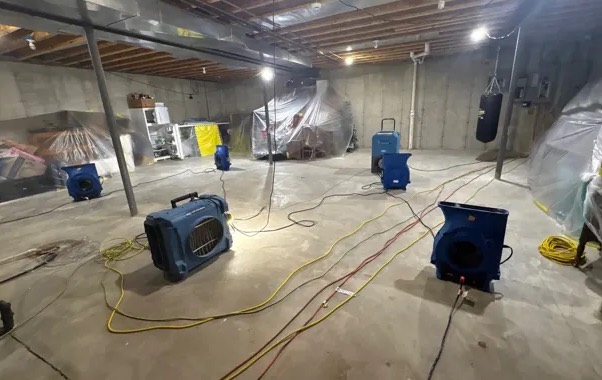
Expert Basement Water Damage Restoration Serving Lone Tree
Water in a basement does not stay on the floor. It wicks up drywall, soaks insulation and seeps into wood framing. In Lone Tree, a few inches of water can damage walls up to two feet high.
One burst pipe or heavy storm in Lone Tree can flood a basement. Local restoration pros serve Lone Tree and nearby Centennial, Highlands Ranch and Castle Pines, with help available around the clock.
The Basement Water Damage Restoration Process in Lone Tree
Basement Sewer Backup Cleanup
Porous materials touched by sewage, such as carpet, pad and lower drywall, are removed. Concrete and framing are cleaned and disinfected.
Basement Mold Prevention
Keeping basement humidity low after drying helps prevent mold from returning, especially in finished spaces.
Basement Floor Water Removal
A slab can look dry on top while still holding water. Moisture readings show when it is ready for new flooring.
Basement Water Extraction
Submersible pumps remove deep standing water, then portable extractors pull water from carpet, pad and the concrete floor.
Basement Wall Drying
Wet drywall is cut back above the water line when it is soaked, and the wall cavity and insulation behind it are dried or replaced.
When to Consider Basement Water Damage Restoration for Your Lone Tree Home
High Humidity Levels Below-Grade
A basement that stays damp and clammy even on dry days has a moisture source that needs attention.
Damp or Musty Odors
A damp, earthy or musty smell in the basement often means hidden moisture in walls, carpet or the slab.
Sump Pump Failure or Overflow
A sump pump that runs constantly, fails to start or lets the pit overflow puts the basement at risk.
Mold on Surfaces
Dark spots on drywall, framing or stored boxes mean the area has stayed wet for days.
How Basement Water Damage Restoration Works in Lone Tree
Step 1: Water Removal
Pumps and extractors remove standing water from the basement floor, starting at the lowest point.
Step 2: Targeted Moisture Evaporation
Air movers are aimed at wet walls, framing and the slab to speed evaporation.
Step 3: Humidity Control
Large dehumidifiers pull moisture from the basement air, with readings checked every day.
Step 4: Final Verification and Restoration
Final readings confirm the basement is dry, and the space is ready for drywall and flooring repairs.
Why Basement Water Damage Occurs in Lone Tree
Foundation Cracks and Leaks
Cracks in foundation walls let groundwater and melting snow seep into the basement.
Clogged Floor Drains
A floor drain blocked by debris cannot carry off water from a leak or overflow, so it spreads across the basement floor.
Window Well Flooding
Window wells without drains or covers fill with rain and leak through basement windows.
Sewer Line Backups
A blocked or overloaded sewer line pushes wastewater up through basement drains and toilets.
Both Residential & Commercial Basement Water Damage Restoration in Lone Tree
Residential Basement Water Damage Restoration
Finished basements used as living space need carpet, pad and lower drywall checked carefully. Soaked materials are removed so the walls and slab can dry.
Commercial Basement Water Damage Restoration
Businesses with below-grade storage need inventory moved out of the water quickly. Wet stock is separated and documented for insurance.
Basement Water Damage Restoration vs. DIY: When to Call the Pros
You can move belongings off the floor and run a household dehumidifier. Drying soaked walls and slabs needs larger equipment and moisture readings to confirm the space is truly dry.
What Influences Basement Water Damage Restoration Cost in Lone Tree
In Lone Tree, basement jobs often run longer than upper-floor jobs because concrete dries slowly. Equipment days make up much of the bill.
Affected Square Footage
Larger basements need more extraction, more drying equipment and more days of drying time.
Access Complexity
Narrow stairs, low ceilings and stored contents can make the work slower.
Drying Time Required
Basements dry slowly, and longer drying means more equipment days and monitoring visits.
Does Insurance Cover Basement Water Damage Restoration?
Many homeowner policies cover sudden basement water from a burst pipe, but not seepage or groundwater. Sewer backup coverage is often a separate add-on, so check your policy.
Reasons to Hire Local Pros for Basement Water Damage Restoration in Lone Tree
Advanced Moisture Detection
Moisture meters and thermal cameras find water in walls and slabs that looks dry.
24/7 Emergency Response
Help is available day or night when water is rising in the basement.
Water Type Handling
Clean water, gray water and sewage are each handled with the right protection and removal steps.
Round-the-Clock Emergency Basement Water Damage Restoration in Lone Tree
If water is near outlets or the electrical panel, do not walk into it. Call (719) 666-5984 for help in Lone Tree and wait for the power to be made safe.
Call Now (719) 666-5984Regions Served for Basement Water Damage Restoration Near Lone Tree
Basement water removal and drying also cover homes and buildings in Centennial, Highlands Ranch and Castle Pines, close to Lone Tree, day or night.
- Basement Water Damage Restoration in Centennial
- Basement Water Damage Restoration in Highlands Ranch
- Basement Water Damage Restoration in Castle Pines
- Basement Water Damage Restoration in Louviers
- Basement Water Damage Restoration in Sedalia
- Basement Water Damage Restoration in Parker
- Basement Water Damage Restoration in Littleton
- Basement Water Damage Restoration in Sterling Ranch
- Emergency Damage Restoration in 80124
- Storm Damage Restoration in 80124
- Water Damage Restoration in 80124
- Water Extraction Service in 80124
- Water Leak Detection in 80124
- Water Removal Service in 80124
Frequently Asked Questions About Basement Water Damage Restoration
Why is quick action important for below-grade flood restoration?
Basements dry slowly, so every hour of standing water adds days of drying and more material to replace.
Why is dehumidification so important after basement water removal?
Basements hold moisture in the air and concrete. Without dehumidifiers, walls and framing stay damp long after the water is gone.
How soon should I call for basement water extraction after a leak?
Right away. Water wicks up drywall and soaks framing within hours, and below-grade spaces are slow to dry.
Should I try below-grade waterproofing myself after flooding?
Sealing a small crack can be a DIY job, but drying must come first, and larger waterproofing work should go to a contractor.
What does below-grade moisture removal include beyond pumping?
Extracting carpet and pad, opening wet walls, running air movers and dehumidifiers, and checking readings until dry.